Your screening options
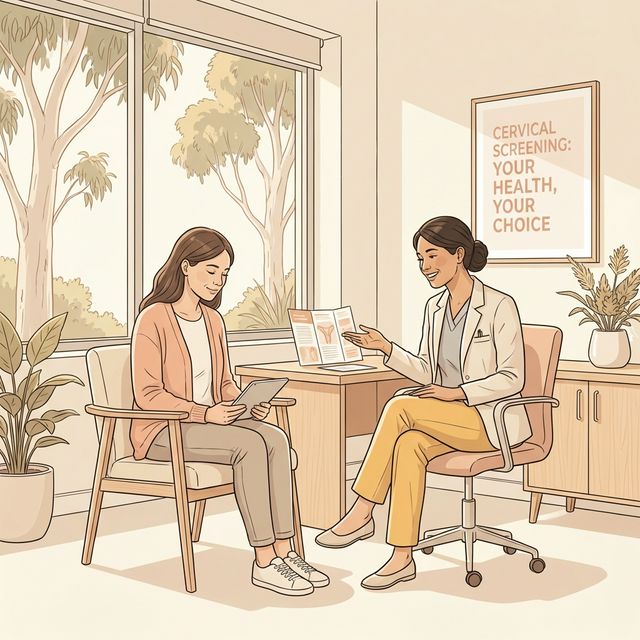
The national program covers women and people with a cervix who have ever had sexual contact. Most people eligible for screening can choose a self-collected vaginal swab or a sample collected by a clinician. Your clinician can explain which option fits your circumstances.
Results and symptoms
An HPV-positive result does not mean you have cancer. Follow-up depends on the HPV type, previous results and other risk factors; some people need another sample or colposcopy. Agree on how you will receive results and follow-up. Bleeding after sex, unusual bleeding or persistent unusual discharge needs clinical assessment even if your screening is up to date. Ask about consultation fees; do not assume the whole visit is free.
Key Takeaway
Routine cervical screening usually tests for HPV every five years from age 25 to 74.
Need an appointment?
Dr Bishoy Marcus can help you with advice and care.